Showing posts with label abu dhabi. Show all posts

Sunday, July 15, 2012

'India and the Persian Connection'

There is a whole lot of talk about how India does not have a robust enough strategic culture. So "Geek at Large", in its own small way, has decided to start hosting guest posts, bringing to the fore varied perspectives in the realms of geopolitics and military affairs.
Today's post deals with the ongoing crisis in the Persian Gulf and the complex Indian response to it where Ananth Durai explains India's understated role in managing the crisis and how it has actually thrown up new opportunities for both widening and deepening our engagement with various players in the region.
India and the Persian connection
Much has been made of the recent move by the Kingdom of Saudi Arabia (KSA) to extradite a terrorist who was involved in the 26/11 Mumbai attacks - many press reports cited the growing relationship in security and intelligence matters between the two countries. It is indeed true that the growing high-level intelligence interaction between Indian and Saudi counterparts has led to arrests of other wanted terrorists in the Kingdom (not just Lashkar terror operatives). But this is just one part of the multi-faceted relationship between the Kingdom and India.
One of the chief drivers of the growing relationship between the India and Saudi Arabia is the perceived Iranian threat to the latter. Over the past 15 years, Iran has managed to expand its influence into countries that were once perceived to be less of a security threat towards the Saudi Kingdom. Today, Iran is believed to have major control over Iraq - via influence over the politico- religious system (with Gulf leaders referring to the Iraqi PM as an "Iranian stooge"), and the two major Shia Iraqi militias (Mahdi Army and the SCIRI - Supreme Council of the Islamic Revolution in Iraq).Iran also has in place a strong alliance with the Alawite-led Syrian leadership and the oft-spoken-about relationship with Hezbollah in Lebanon.
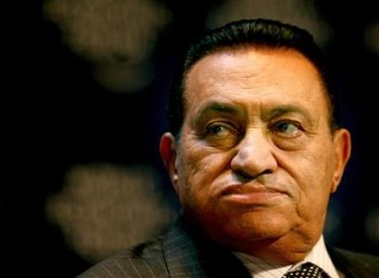
With the removal of President Hosni Mubarak in Egypt - a staunch ally of the Saudis and one who was relied upon as a strong pillar of support especially on the security and defence side of things - the Kingdom sees itself surrounded by emergent problems. The newly elected President of Egypt, Mohammed Morsi, is overtly promising to strengthen ties with Iran and when you couple this with the continuing instability in Bahrain and Yemen, it is completely understandable why the KSA in particular and the Gulf Cooperation Council(GCC) states in general are looking increasingly nervous.
Indeed, one can but imagine the effect that a nuclear Iran would have on the security affairs of the various Gulf Kingdoms. As a result of this KSA has no choice but to build strong ties with regional powers such as India, Pakistan, Jordan and Turkey. It is also a time when the GCC with KSA, UAE and Qatar at its core is taking proactive steps to defend its security. One standout example of the same would be these countries lending support to Syrian rebels - by providing arms, finances as well as diplomatic support in order to break the Iranian alliance framework in Syria and Lebanon.
With all this happening in the Saudi neighbourhood, the last thing that the GCC needs is an Indo-Pak war which would remove two regional powers who have the capability to intervene favourably in the event of a war between itself and Iran. KSA of course also relies heavily on Pakistani military personnel to man its own armed forces in exchange for the transfer of military equipment, and perhaps for financing up to 30 per cent of the Pakistani military budget. However, it is likely that Pakistan would request these personnel to return in the event of a war with India, which would make the Gulf security situation even more precarious.
The quiet visitors to New Delhi
Last December saw some quiet visits by a few Gulf dignitaries to Delhi - one of whom was Prince Turki Al-Faisal (the former Saudi Intelligence chief) and another was a senior advisor to the Kingdom of Kuwait. Officially they were in India to interact with sundry mandarins in South Bloc and visit the Institute of Defence Studies and Analysis (IDSA) but truth be told these visits were probably of much greater importance than is readily understood.
As it turns out, the GCC has been seeking a mediator with Iran for some time over the nuclear issue. Initially, the Sultanate of Oman was chosen due to its relatively close ties with Iran. However, as one Gulf official put it, "No big nation listens to a small nation". This then led to Turkey being asked to mediate between the Iranians and the Arabs. However, the Gulf Kingdoms have been disappointed as Turkey has been unable to deal with the Iranians effectively.
The message conveyed from these visits was that the Gulf leadership is impressed with the way India has been able to deal with the Iranians - particularly, the mechanism created to deal with the subject of Afghanistan (where all difficult issues are discussed) and also India's ties with the entire spectrum of the Iranian leadership. The Gulf Kingdoms, it seems, want India to utilise its relationship with Iran in order to mediate on the nuclear issue. In reference to this, sources have confirmed that India has indeed opened a channel with the Iranians although how effective this has been is, as yet, unclear.
As a quid pro quo, there is an expectation in Indian quarters that the Gulf Kingdoms who have considerable influence in Pakistan can help moderate Pakistani behaviour on terrorism (and other areas of concern), increase investments in Indian infrastructure which will help develop the economy (as it did for the US), growth in all areas of the strategic relationship and pave the way for a FTA to be signed shortly.
Afghanistan
While the Gulf nations are pushing us to help settle the Iranian nuclear file amicably - we can't obviously forget our very real interests in Iran. Since Pakistan has blocked India's access to Central Asia and Afghanistan, India has no choice but to build close relations with Iran. Iran is central to our trade with Central Asia and Afghanistan. Our interests there are not merely trade-oriented but also involve security and defence matters in Eurasia which have a direct impact on us.
The development of the Iranian port of Chabahar and multi-modal transport (rail and road) into Afghanistan as well as Central Asia will allow us access to a highly resource rich region that can be utilised to support our economy. It will also serve as a shorter route for Indian goods heading towards Europe, thus helping to increase the competitiveness of Indian goods.
However, there is also a military aspect to such infrastructure. Having access to roads and rail will give us the capability, should the need arise, to intervene in a large way (subject to Russian and Iranian support of course). All this suggests that India has tough decisions ahead in order to balance our interests in the Gulf with our interests in Iran.
The nuclear file: what lies ahead
Gulf sources acknowledge that sanctions need time to work and a long-term solution is required to fully resolve the issue. It appears there is both a short-term and a long-term strategy at play here with Gulf states, Israel and the west in agreement on these aspects. The short-term strategy is to do all that is possible to delay the Iranian nuclear project by any means possible (including a last resort military strike on Iranian nuclear sites). The long term one, that of regime change (without the need to intervene militarily), can delay the prospects of a nuclear Iran indefinitely if it ever comes to fruition.
A former chief of the Mossad, Meir Dagan, acknowledged that air strikes on Iranian nuclear sites will only delay the project by two years at the most. However, in a recent interview, Dagan admitted that an air strike or regional war will result in people getting behind the regime and hence extending its life. Many US, GCC and Israeli officials agree with the view expressed by Dagan and conclude that the Iranian regime is under deep pressure to deliver results to the Iranian people. Dennis Ross (former Special Advisor to the Obama Administration on the Persian Gulf), in a recent conference, described Iran as similar to the Soviet Union in 1981 where ideology is no longer believed and the veneer is wearing thin. Therefore it is clear that all sides consider a regional war is not the best option although it may get sparked of suddenly as we shall see below.
Concurrently, the aim of the sanctions regime on Iran is to force the Iranian leadership to give up their nuclear weapons programme. If they don't, the pressure on the economy and the Iranian people will result in some sort of Arab spring-type revolution. The use of cyber weapons by western and Israeli intelligence has been particularly successful in the case of Iran with US officials suggesting that they have managed to delay the programme by a couple of years. Going forward, we can expect to see the collective use of sanctions, cyber attacks as well as a naval blockade by the west and Israel.
Why a naval blockade?
A nuclear Iran is not going to be in the interests of either Russia or China as Iran would naturally compete in the same sphere of influence of these two nations, particularly what Russia considers as its back yard, Central Asia. As a result, a blockade imposed by the west will not be really opposed by these two and it will mean that the Iranians will have no option but to cooperate with the world powers on their nuclear programme. After all, attacking your only allies, Russia and China, will not help the Iranians.
Interestingly, the US military has apparently conducted a number of joint exercises off the coast of North Carolina with their Russian and European counterparts, dealing with the "repulsion of an attack by small-sized vessels, helicopter rescue operations, personnel transfer procedures and joint manoeuvring" - operational scenarios that could well describe an asymmetric naval showdown with the Iranian Navy.
After a strike
Some alarming estimates say that Iran is only 8 months away from achieving the capability to build a nuclear weapon and hence Israel as well as the west may be pressured to act militarily before then. In the event of such a scenario, India will have to prepare contingency plans to evacuate the millions of Indians in the region as well as secure energy supplies for itself in the event Iran chooses to retaliate by closing the Strait of Hormuz.
Gulf forces are already on red alert in the region as war between the US/west and Iran could take place by miscalculation on either side, not to mention the high concentration of military vessels/aircraft in the Arabian Gulf where the chances of accidental shots being fired and escalating into a conflict are rather high. Contingency measures have been put in place for the last 6 months by the GCC fearing the worst.
One hopes preparations for such a scenario are being made by Indian military planners as well.
Summing it all up
The growing threat of war would mean that India will have to source oil from more stable neighbourhoods. Africa and South America are possible solutions. India will also need to develop its own shale oil and gas resources. The threat of war will also mean that oil prices will remain sticky at least for the next one to two years and the New Delhi will have to take this into consideration when drawing up its financial plans.

(Ananth Durai is a London-based commentator on regional affairs with a special interest in West Asian political and security issues. He currently works for an accounting firm and has worked extensively within the financial industry. The views expressed by him are personal. You can catch him on Twitter@ADurai)

Originally reported here: http://ibnlive.in.com/blogs/sauravjha/2976/63684/guest-post-1-india-and-the-persian-connection-by-a-durai.html

Thursday, March 24, 2011

Quick Update: Libya, Syria + GCC


Hi Folks!

Here is a short update on Libya as well as the GCC.


British Royal Air Force (RAF) Typhoon aircraft taxi at Gioia Dell Colle Air Base, in Italy March 22, 2011

Libya

  • We expect to see more coalition strikes on Gaddafi's armed forces. In particular we expect Libyan tanks and other artillery equipment to be destroyed over the next few days.
  • If a settlement is to be agreed, we expect the country to be split into 2 - Tripolitania and Cyrenica. Where Gaddafi will retain control of the West (Tripolitania) with the rebels holding the East (Cyrenica).
  • The person running the rebellion is Gaddafi's former interior minister Younis Al Obaidi, who is backed by a few military officers.
  • One of the officers backing Obaidi is supposedly close to the US pentagon. As the WSJ had reported the Libyan National Council can rely on arms supplies coming from over the border in Egypt that is indeed partly financed by the KSA.
  • Obaidi's aim is to recapture Adjdabia from the Gaddafi forces, since the western coalition air force is taking out any Gaddafi forces on the main highways. Once this is complete, we believe he will head for the coastal oil transportation hubs - especially Ras Lanouf ( a site of a major oil export terminal). 
  • Capture of these oil export terminals would mean oil revenues and hence greater viability of the state of Cyrenica. Establishing a state of Cyrenaica is the minimum the rebels aim to achieve at the moment.
  • A problem Obaidi is facing is that the force is filled with enthusiastic civilians who have very little military training. 
  • Meanwhile Gaddafi is aiming to grab Zintan and Misrata as well as other Western towns. These cities would be important to be able to stabilise the Tripolitania region.
  • We expect additional political appointments to be made over the coming week - we strongly expect Ali Issawi (the former Ambassador to India) to be given a very senior posting - either in Foreign Affairs or Economy.
  • We believe most western capitals are now debating on the end game in Libya - as in what the west hopes to achieve in Libya. Also at what point do they cease military operations.

GCC

Soldiers from the Gulf Cooperation Council (GCC) forces guard the entrance to the Pearl Square from their armoured vehicles in Manama, March 19, 2011.


KUWAIT CITY — Arab states in the Gulf plan to deport thousands of Lebanese Shiites over their alleged links to Hezbollah and Iran's elite Revolutionary Guard force, a Kuwaiti newspaper reported on Thursday.
Al-Seyassah, quoting London-based Arab diplomatic sources, said the measure was being considered because of intelligence reports that Lebanese Shiites activists had been involved in protests in Bahrain and Saudi Arabia.
Based on the assessments by the United States, France and Bahrain, alleged Hezbollah and Revolutionary Guard agents were leading the protests along with local Shiite clerics in Bahrain and Saudi Arabia's Eastern Province, it said.
It said Bahrain's decision to suspend flights to Iran, Iraq and Lebanon and its condemnation of remarks by Hezbollah chief Hassan Nasrallah had "paved the way for the deportation of thousands of Lebanese Shiites from the Gulf."
"No Lebanese Shiite linked to or suspected of being associated with Hezbollah and the Revolutionary Guards will remain in the Gulf," the diplomatic sources said, citing high-ranking Bahraini officials.
Bahrain is preparing to deport 90 Lebanese Shiites, most of them arrested during the Shiite-led, pro-democracy in the kingdom, and is examining the status of 4,000 Lebanese families living in the Gulf kingdom, the sources said.
Last week, Bahraini authorities carried out a bloody crackdown on the protesters who have been demanding political reforms since February 14 in the tiny Shiite-majority, Sunni-ruled kingdom.
The crackdown came hours after a Saudi-led joint Gulf force rolled into Bahrain to back up the regime, a move condemned by Shiite Iran and the head of Lebanon's Shiite militant Hezbollah who has offered to help the demonstrators.
On top of the suspension of flights to Beirut by its two national carriers, Manama has advised Bahraini citizens to avoid travel to Lebanon, a popular destination for wealthy Gulf Arabs.
"Due to threats and interference by terrorists," the Bahraini foreign ministry said on Tuesday it "warns and advises its citizens not to travel to the Republic of Lebanon as they might face dangers threatening their safety."

Bahrain and KSA have pointed the finger at Iran for the unrests that have taken place over the last few weeks. This is evident by HM King Hamad's speeches of an external hand in the protests and also by the expulsion of diplomats between Iran and Bahrian.

The expulsion of Lebanese nationals appears solely directed at Iran and Iranian interests. The MOIS (Iranian Ministry of Intelligence Servies) and IRGC (Iranian Revolutionary Guards Corps) are known to use Lebanese nationals for their operations in the GCC. This article suggests that several individuals appear to have been caught taking part in protests.

The expulsions of Lebanese individuals linked to the Hezbollah will serve to heighten the tensions between Iran and also to protect the KSA and Bahrain from any potential Iranian involvement in any unrest or future protests.

 Due to the large Lebanese community in Bahrain, any expulsion may also serve as a sanctioning of the Hezbollah led Lebanese government. We see this similar to the sanctioning of the Hamas government in Gaza by the EU after winning the democratic led elections. However for this to be truly effective, it would require a GCC wide expulsion of Lebanese individuals - the article above does suggest that there may be a GCC wide expulsion and we agree that a GCC wide expulsion may take place. There have been reports in late 2010 of expulsion of Hezbollah supporters from the UAE, so this would not be the first time that a Gulf state has taken action against lebanese expatriates in the Gulf.

Iran has making its own moves recently, by allowing Iraqi shi'ite political parties to form an alliance against the "KSA intervention" in Bahrain. This alliance has threatened to open a front (by sending shia tribes to the border) in the KSA/Iraq border in solidarity with the Bahraini shia.

Syria

In light of the major protests in Syria. This has caused serious worries of instability in neighbouring Iraq - across all parts of the country. Therefore, the Kurdistan Regional Government and the central government in Baghdad have struck an agreement to provide for security of all northern iraqi oil fields.

It appears that there is a heightened risk of serious instability all over Iraq as a result of a protests in Syria. We expect tightening of the border security between Syria and Iraq over the next few days in order to prevent any instability spreading into Iraq.

----------------------

Thank you for reading. Feel free to email us any questions you have to eye.on.middleeast "at" gmail "dot" com.

Wednesday, February 2, 2011

Egypt plus Oman - UAE Spy Issue - Update


This will be a quick update:

The editor has been watching the Egyptian events unfold. Yesterday, Egyptian President has agreed not to stand for re-election and neither will his son Gamal Mubarak be allowed to do so. Similar statement also came out from Yemen's president.


From what we are told Ambassador Frank Wisner travelled to Cairo and met with Mohammed El Baradei first. After this meeting, he has met senior Egyptian officials to convey messages from the White House. The white house wanted Mubarak to step down immediately and allow the Army to control Egypt during the transition period until elections in 2011. We believe that this is so that the US and Israel are given enough time to decide the best course of action. Israel was infact, against the decision to ask Mubarak to step down, they see Mubarak as a guarantor to the 1979 Camp David accord. US and Israel must be increasingly interested in seeing Omar Suleiman stay on. 

We feel that it was unlikely that Mubarak would have wanted to stay on as President anyway, in light of his health condition. Mubarak wanted to pass on the presidency to his son Gamal in the previous elections. 

Iran's position

The editor does not doubt that Iran will attempt to increase its influence in Egypt. Iran must already be making plans for action such as approaching members of parliament who are considered to be pro-Iranian. Iran will try its best to expand influence and perhaps fund election expenses for pro-Iranian members (or parties) to be elected into Parliament. This would naturally draw GCC into this quest for influence over Egypt. We expect to see a similar situation to Lebanon where the Kingdom of Saudi Arabia spent a huge amount of money (rumours state that these are around a $1billion) on helping Saad Harriri become re-elected. As it stands, Israel appears to be the most worried of the situation, and as much as the GCC, it may be Israel that will step in to help a pro-Israeli party to be elected.

Saudi Arabia was not shy to protect its interests in the current Egyptian unrest. Reports have been received that King Abdullah had set up a team comprising of Security and Military officials to keep an eye on the situation in Egypt. If the situation was to further deteriorate, it would have seen KSA send in troops to take any US made equipment. The editor feels that this is to protect KSA from having these weapons be used against them.

The Future

We at the blog see it as imperative for US and Israel to continue to back Omar Suleiman, who is seen as a man that Israel and the West can do business with. Omar Suleiman handles numerous complicated issues on behalf of the Mubarak regime - especially the Palestine file. Naturally this see's Omar Suleiman making regular trips to Tel Aviv. 

Oman and UAE Spy Issue

Oman uncovers 'spy network but UAE denies any link

http://www.bbc.co.uk/news/world-middle-east-12320859

The authorities in Oman say they have uncovered a network of spies working for the United Arab Emirates, according to the state news agency.
The alleged agents for the UAE are said to have spied on the Omani government and military.
The UAE government denies any knowledge of - or link with - such a network, according to its news agency.
The neighbouring countries are members of the Gulf Co-operation Council and normally enjoy good relations.
Government sources in Oman say the ring was discovered some months ago and that a number of Omani nationals have been arrested.
The spies may have been interested in the issue of the succession of Oman's Sultan Qaboos, according to a security official quoted by the Agence France-Presse news agency.
The sultan is 70 years old and does not have children.
But others suggested the alleged spy ring could be more related to regional politics.
"One possibility is that the UAE wants to know more about Iran-Oman relations because of Tehran and Muscat's long ties in security and military co-operation," Theodore Karasik, from the Institute for Near East and Gulf Military Analysis, told Reuters news agency.
Oman has close relations with Iran, partly because the two countries are joint gatekeepers of the Strait of Hormuz, the route for 40% of the world's oil tanker traffic.
But the sultanate also has strong military and diplomatic ties with the West.
The UAE is a staunch ally of the United States.
UAE authorities received the news with "shock and surprise" according to the Wam news agency.
"The UAE expresses its full willingness to co-operate with... Oman in any investigations that it carries out in full transparency to uncover (those) who try to mar relations between the two countries," said a foreign ministry statement.


Editor can reveal that the spies arrested were working for the UAE State Security services under the control of Hazza Bin Zayed Al Nahyan. The target appears to be senior members of the government, specifically members who appeared to be too close to Iran. The members infiltrated the Cabinet, military and the ISS (Internal Security Service). Rumours circulating appear to place the number of people arrested at 15. 

Abu Dhabi and Omani intelligence officials have met several times since the arrests in order to discuss the issue, but talks appear to have broken down. Hence the release using the official Oman News Agency. 

HM Sultan Qaboos had refused to travel to the GCC Summit held in Abu Dhabi, this was indeed due to learning of the arrests of the spies. 

It is no secret that several members of the cabinet including the Foreign minister are favouring increasing political, economic and military ties with Iran. This may have been the reason why the Emirati's had decided to increase intelligence gathering in Oman.

The retaliation from the UAE have included sending back several senior Omani army officers serving in Emirati ranks (as is common in the GCC military's). Oman suspects that several of these officers will continue to stay in touch with Emirati intelligence.

Thanks for reading.