Sunday, April 15, 2012

Ankara Whispers...

The latest from Ankara is the following:


The latest from Ankara is that Iran asked US/European powers to restrain Israel from striking as long as negotiations continue. There is also semi approval of stopping 20% enrichment and in return Iranians made a list of demands such as saying that they wont dismantle the reactor in Fordo and asking the west to gradually remove some sanctions in return.

Next will continue to talk in Baghdad: - why Baghdad? This is possibly due to Iran having an extensive intelligence network there in order to find out what the negotiators are thinking.

Why do the Iranians want to talk all of a sudden?
1. Possibility of an Israeli military strike and 2. Congress's decision to pass another batch of U.S. economic sanctions affecting the import oil from Iran.  Analysts believe that Iran has been accumulating during the last six months of Uranium enriched to 20%, giving it greater flexibility to withdraw from the Treaty on the Prohibition of Nuclear Weapons and putting together a bomb during a short period as did the North Koreans. The Iranians know that the Israelis know it and so the fear of Israeli strike seriously. 


India has started looking elsewhere for oil because it fears that Iranian oil may be disrupted as a result of a war.


Syria:


Turkish strategists have released a report on the 10th of April regarding intervention in Syria. For more insight into what an intervention will look like please read the report: 
http://www.orsam.org.tr/en/enUploads/Article/Files/2012410_2012410_115raport%C3%BCrkin.pdf


However, the Turkish/NATO strategists know that action in Syria means challenging Russia hence are extra cautious on Syria. Challenging Russia is a big NO NO for NATO and don't really want to go into conflict with Russia. Plans are certainly in place. It is likely that intervention in Syria will only take place if NATO are with Turkey on the plans as they are challenging Russia.


 A leak of a report by officials, giving an insight into failures by NATO in the recent campaign in Libya suggests that NATO is not onboard. 
The article in NYT can be read here: 
http://www.nytimes.com/2012/04/15/world/africa/nato-sees-flaws-in-air-campaign-against-qaddafi.html?_r=1&scp=2&sq=nato&st=cse


PM Erdogan's visit to KSA also ended in numerous disagreements on financing of refugees, purpose of the safe haven and most notably Islamists ruling the Free Syria in a post Asad world.

Wednesday, April 4, 2012

Hezbollah, Israel, Iran and the LIon - Regional Update - April 4th

Firstly, We at the Middle East Analysis would like to apologise for our long delay in posting information. This update will obviously slightly longer than usual to explain the complete scenario.

Summary of Regional Situation:

- GCC conveys message to Russia that either way the revolution will win either via a coup or a war of attrition
- Syrian intelligence has  increased support to the PKK, in response to Turkish logistical support of the Free Syrian Army (FSA)
- Israel is on red alert based on intelligence inputs of Hezbollah preparing to launch a diversionary strike against Israel to get the Syrian people to divert their attention to Israel and also to any possible retaliation for an attack on Iran
- GCC on red alert in expectation of an Israeli strike which they believe can take place from any time now.
- Turkish government preparing for intervention in Syria - its a case of when, not if.
- Libyan veterans bought in by Qatar to join the ranks of the FSA

------------------------------


Contrary to news reports weapons have been reaching FSA and will do so in a faster way given that the US has decided to supply communication sets (that was previously being intercepted by Syrian intelligence).

Jordan and GCC intelligence mixed with western intelligence are running their intel/logistical/financial support from Iraqi sunni tribal areas.

PRC even though vetoed the UN resolution, they dont think Assad can survive. Damascus was the first major middle East Hub for the Chinese intel. The Syrian office of PRC state security Guanbu sent many messges to Beijing warning that Assad's fall is inevitable.


Apparently Guanbu has been on the ball on events in Libya and Egypt i.e. got it right. So the Top Brass at PRC  party HQ is listening.


Guanbu has a thinktank called the Chinese Institute of Contemporary International Relations- they have been tasked with preparing for the post assad world. The think tank told leadership to be neutral on Syria as whoever comes in next will guarantee all the contracts with PRC. PRC role mainly civilian but russian contracts maybe cancelled as mainly military in nature.


So, the GCC have signaled that the revolution will continue until the Syrians win, Russia has escalated with naval exercises etc, but the hope is that Russia will reach an accommodation with the GCC to guarantee each others interests. It is clear that there will be only one winner in this battle.


Reports coming from Syria suggest that Libyan mercenaries are being bought in by Qatar. Libyan embassy has been posting adverts for hotel rooms in several turkish cities. Officially these are war veterans who are coming to Turkey for medical treatment and will likely join the FSA camps or join the front line. Rumour has it Qatar is prepared to pay $1000 per month. This was given further credence as Gulf nations pledged $100million in salaries for FSA soldiers.

What is taking place in Syria is a clear proxy war.

Massoud Barzani from the Iraqi Kurdish Regional Government has promised Syrian Kurds that they will receive intelligence support for their cause.

The ultimate plan for the region under the GCC eyes is for Syria to become an independent Sunni power which protects the minorities. Then the next plan of attack is to ensure Hezbollah disarms in accordance to the UN security resolution. This resolution was agreed by Hezbollah originally. Hezbollah will become purely a political entity as a result.

Israel is likely/or will be encouraged to give up the Golan to the new "Free" Syria to push peace in the region.


Meanwhile, the next step will be to bring back Iraq from Iranian control and become an independent power. There is a renewed thrust to bring down Maliki of late hence why Maliki has begun to help Assad ever so slightly but remain neutral. Maliki knows he is next.

This is all to remove Iranian influence completely from the region. It is an open secret that the Gulf is in open conflict with Iran and they are determined to win!

Turkish General inspects troops on the Syrian border last week
 
Turkey in the next few weeks will be compelled to act by creating a humanitarian corridor as it sees the mounting number of refugees headed for Turkish refugee camps. Now that Damascus is giving money to the PKK to cause problems, Turkey will also have to act to prevent any miscreants from entering.

We predict that Erdogan would have conveyed to the Iranian leadership last week that the Turkish government is compelled to act in Syria and does not wish for conflict against Iran. So  All we can say Turkey is probably ready for intervention now and are ready to roll. It is communicating with Iran to prevent any escalation between them.

-----------------------------------

Israel continue to remain on red alert due to Hezbollah getting ready for a major offensive. Hezbollah hopes to deploy booby trapped drones and anti aircraft batteries. Also in expectation of a renewed confrontation with Iran, Hezbollah have been busy preparing. In order to mitigate their weakness on land and air, Hezbollah are currently busy doubling their underground tunnels and cave networks.


US and Israel continue to exercise regularly - a few months ago US troops had joined Israeli troops on the ground to deter any Hezbollah strike.

We could expect a pre-emptive attack any time by Israel against Hezbollah. The aim of the Hezbollah's action against Israel is not only for diversion but also to expend any Israeli hardware destined for Iran.

The GCC is also on red alert in expectation of an Israeli strike on Iranian nuclear sites at any time from now. A lot is being done to prevent this war - particularly the latest US intelligence assessment. This has not deterred the Israeli resolve. Although, US is keen to impress on the Israeli government that they should wait for the sanctions to bite. It usually takes 6 months for this to take place - hence by June/July we can start to see the effects. No one knows what the Israeli's are planning but the regional situation is such that Israel can attack Iran at any point.

Israel has also leaked the news that Israeli recovery crews will be based in Azerbaijan to rescue any downed pilots in a mission in Iran. Some Azeri politicians have also begun to call Northern Iran as Southern Azerbaijan!

We can also possibly expect Hassan Nasrallah to retire as the leader of Hezbollah after the Syrian war and be replaced by his deputy. But this is a story for another day.

--------

Thanks for your interest - as always drop your comments at "eye.on.middleeast" "At" Gmail dot com


Friday, November 4, 2011

Regional Update - Nov 4th

This week has been particularly action packed with Israel testing a ballistic missile system, Turkey threatening to send its warships to escort aid ships to the port of Gaza, Syria - Arab League deals, UK stands ready to deploy its Trident equipped submarines in Arabian Gulf waters to support an allied mission to destroyIranian nuclear sites.

Syria

We continue where we left off from our 2 part series on the Syrian situation.


We are of the opinion that large number of alawite leaders (both businessmen and military) are of the view that it is now too late to save the system. However, the question they seem to be pondering is whether they will continue to have a role in a post Assad world? Will the wider public take it easy on them? Looking at Egypt,  businessmen who were allied with the Mubarak regime are today being prosecuted and targeted, so we should probably conclude that Syrian public will not go easy on the alawite community. Therefore It is likely that several Alawites may fight right to the end and prolong the brutal attack on citizens. This will lead to further growing international pressure. Just yesterday the Chinese asked the Syrian government to resolve the issue.

Is the Syrian government agreement with the Arab League to implement reforms a sign of strength or weakness? Probably weakness. In our opinion, this is just to buy more time, on the ground not a lot seems to have changed as more deaths were reported yesterday and today.


The Alawite military can still rely on a vast number of loyal soldiers, therefore this is a recipe for civil war. So therefore efforts are underway to convince the army to conduct a coup in order to have an orderly transition of power preventing a civil war from taking place. Will this be successful? Maybe.

Keep in mind, that for Obama and Sarkozy elections are coming up. It is easier for them to show external success than to show domestic economic successes, so you will see Sarko and Obama more active with regards to Syria.


Iran

The international pressure on Iran seems to be increasing. If the IAEA and western/GCC intelligence reports are to be believed it appears that Iran is speeding up its nuclear activity.   If this is not resolved diplomatically, war is the last option. Therefore, countries require more time to prepare for the eventual war.


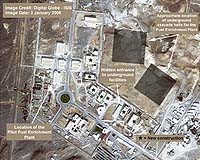
The Gulf intelligence agencies have compiled an intelligence report titeled "The nuclearisation of Iran". This is meant to be issued prior to the GCC Defence ministers meeting in Riyadh sometime in November/December. According to the report, Iran has recently tested  a neutron initiator, which is used to detonate anuclear bomb at the Fordo site. It also mentioned that Khamanei has taken full contol of the nuclear file, away from Mahmoud Ahmadinejad.

The report also notes that North Korea recently sold Iran an MCNPX 2.6.0 computer program that simulates the neutron and photon flows in nuclear processes.A North Korean team of engineers were in Tehran to train defence ministry officials on the program.


There appears to be a lot of deception and psy-ops going on. First Britain confirmed that it will take part in any operation to support an allied mission to destroy Iranian nuclear sites by deploying its Trident equipped Submarines. The British subs were in the Arabian gulf a few years ago conducting manuevers with other allied forces.

Raising the nuclear issue about Syria's attempts to acquire nuclear capability was also we think, a means to attack Iran diplomatically and also keep the pressure on the Syrian regime. Transfer of US troops from Iraq to the Gulf is also due to the fact that there is an estimate that Iran will respond to the removal of the Assad regime by retaliating in the Gulf. This will be done via proxy groups such as Mahdi army in Iraq (the IRGC is busy professionalising the Mahdi Army and building it on the lines of Hezbollah), Hezbollah and others.


Israel Air Force planes participating in an aviation drill at Decimomannu air base, Italy, Oct. 2011.

Another interesting piece of news was the NATO exercise with the Israeli Air force, where F-16s travelled 1700km to bases in Italy, which was supposedly a dress rehearsal for an attack on Iran. Then also the leak of news to the media about PM Netanyahu convincing his cabinet to agree to military strikes on Iran. Our opinion is that this is nothing but strategic deception in order to maintain the pressure on Iran and divert its focus away from saving the Syrian regime. These exercises are also due to the fact that western alliance do not rule out some response by the Iranian regime to the removal of the Assad regime (their ally).

The decision for Erdogan to send Turkish Naval ships to escort aid ships to Gaza may also be strategic deception. Most people know that the Turkish Navy has no capability to take on Israeli navy, therefore there is a possibilitythat this serves as  a cover for some other action.

Saturday, October 29, 2011

India and the Syrian Imbroglio: Part 2


The conclusion in the GCC is that a civil war will strengthen the Asaad regime and allow his regime to last longer. This is why from the beginning the KSA has been telling the US that they don't want the MB in power in Syria (The US is busy cutting deals with MB in Egypt and Syria if some sources are to be believed but we'll leave that for another day) and that the KSA want a secular govt in power (another reason for this is that arabia has been at war with Mesapotamia and Persia since mankind).

So what’s the next step?
  
The next step is for the intelligence services of the GCC, Turkey and Jordan to contact the key movers and shakers within the Syrian military. Making them split and join with the protestors will actually strengthen the Asaad position and allow him to retain control for longer. Then Syria will descend into another Iraq. So the move is to essentially establish contact with the Syrian Colnols/ National Security Council etc and negotiate with them. Get their opinions together and eventually cripple the ability of the military to function. Then essentially ask for their support for the Syrian people's aspirations. This could be similar to that of Egypt or could even be via a military coup de etat.

This should occur when soldiers are sick off killing unarmed protestors to the point of disgust and start rebelling against illegitimate instructions from superiors.

The defection of Col. Maher Al Asaad showed that even minorities are against the Asaad regime. The protestors have decided not to take up arms and this is actually to prevent a civil war from taking place.

Asaad's response.

 
Syrian army operations in Northern Syria

Asaad's response has been quite smart. He is not afraid to kill many people. His forces in key positions are mainly from the Syrian minorities and from families that have been allied with the regime. This has brought an attitude where the soldiers are killing for the protection of their communities. The continued use of the terms 'fighting armed groups' is to project a legitimacy and maintain the morale of the military and avert pressure.

However, our sources suggest that the Asaad regime has decided to sideline the military from anti protestor operations. The regime has chosen to use the Hezbollah, Iranian police/troops and other Alawite militia's to conduct the anti protestor policing/killings. This is to prevent the military from splitting.

The Syrian intelligence has conducted several operations in neighbouring countries. Intelligence sources confirm that several key opposition figures (Over a dozen) have been kidnapped in Turkey and Lebanon by the Syrian intelligence. The well known case to date is that of Colonel Hussein Harmoush who has retracted all his statements that he made when he had defected.

Tehran's role

Tehran's role is to provide military support and also from a strategic perspective provide the Syrian regime with the experience (dealing with protestors, their communication, disrupting protesters via the internet) that was learned during the 2009 mass protests in Iran in the wake of Ahmadinejad's election victory. 

The Iranian National Security council have written a document on how they can provide support to the Syrian regime. These mainly involve economic projects such as the $10billion oil & gas pipeline from Iran to Syria of which lots of money had already been transferred to the Syrian government.

Iran will have to switch focus back to its internal problems eventually with planned demonstrations against Corruption and also how to organize future parliamentary elections. It is also important to note the last IRGC exercise was actually on how to deal with demonstrations across Iranian cities.


Conclusion

Our conclusion is that we expect to see this conflict being drawn out for a longer period than previously expected although the Turkish intelligence is telling its friends that Asaad's fall will come quickly. Is this because they have already began negotiating with key players?

As India is a relatively fringe player in this crisis, we should remain neutral and suggest that the Asaad regime must implement reforms or risk exhausting the patience of the international community. At the same time, we should begin establishing contacts with key elements of the regime to ensure our interests in the country are protected in a post Asaad Syria.

India and the Syrian Imbroglio: Part 1


India and the Syrian Imbroglio

President Assad has been a good friend of India, as was his father Hafez Al Assad. Both Syria and India are secular countries, have been partners in NAM and have shared several common interests (economic and diplomatic). However, India has expressed its concern over the current situation in Syria and that too with good reason. According to the UN over 3000 people have been killed since unrest broke out in March.


India along with several nations (Brazil and South Africa) have sensed that another military intervention by is in the offing. In order to prevent another Libya like situation, India along with what is termed as IBSA – India, Brazil and South Africa, visited Damascus and had told President Assad that he needs to implement multi party reforms and thereby alter article 8 of the Syrian constitution which states that only the Baath party can select its leader. In return, Assad told his Indian interlocutors that he did make some mistakes when handling the situation and a national dialogue was in process to solve the prevailing problems. Many analysts have opined that this is at best a stall tactic for Assad to retain power.

The Syrian protests are being done for genuine economic and political reasons, however, there are nations in the region who see it as in their interests to remove Assad and are taking advantage of the prevailing situation. The Assad regime has been allied with Iran over several issues – Iraq, continued support of the Palestinian groups such as Hamas and military support to Hezbollah. Iran has deployed extensive military support to Hezbollah via Syria.


Iran sees the protection of the Syrian regime as part of their strategic interests. As part of this process, Iran has sent police forces, militia, advisers and has brought in Hezbollah militiants to help Syria deal with the current unrest. The aim is to utilize and apply the experience learned in dealing with the unrest in Iran after Pres. Ahmadinejad’s victory.

The GCC along with an alliance of other countries were formed around 5 years ago to coordinate against what was seen as growing Iranian expansionism. The GCC had felt threatened as Iran had extended its influence throughout the region. In Iraq – today the GCC views the Iraqi PM as an “Iranian stooge” and for example Iranian backed shia militants who are extremely powerful in the south of Iraq have fired scud missiles into Kuwait. Lebanon has now a Hezbollah dominated government which is naturally aligned with Iranian interests. In Yemen, Houthi rebels who are in the Northwest of Yemen were battling Saudi troops as well as the Yemeni government troops and had seized several villages on the Saudi border. The GCC as well as Yemen had accused Iran of funding and arming the rebels. With the ongoing unrest in Yemen, there are fears in Riyadh that Iran could take advantage of the situation. In Egypt, Iran has attempted to build relations with the government as well as pro-Iran groups. Lastly, the GCC had also accused Iran of backing the unrest in Bahrain – the US had confirmed that they had intelligence to confirm this view. Several Iranian spy cells have been dismantled in the last few months in Kuwait and Bahrain.

All these moves by Iran, have made the GCC feel surrounded and feel threatened. As a result, the GCC and its allies have decided the time has come to aggressively remove Iranian influence in the region. As part of this process, the GCC has decided to turn up the rhetoric and coordinate with Sunni Turkey against Syrian President Assad.

The removal of President Assad will deliver the first defeat to Iranian influence in the region. It will cause the supply lines to Lebanese Hezbollah to be damaged and thereby weaken Hezbollah. The Iranian regime has been utilizing Hezbollah for its nefarious activities in the Gulf, a swift military force that can be used to defend Iranian interests in the region and fight the GCC in a war (if it comes to that).

What will we see now? 

The Leader of the Free Syrian Army


President Assad has now crossed the point of no return. Intelligence sources have pointed out that defections have taken place in the Syrian conscript army. Slowly but surely if the killings of the Syrian people continue, the Syrian army begin to defect with the protesters – as soldiers question the orders provided by the Syrian military high command.

The UAE is said to have already offered Assad asylum. However, the GCC as well as the Turkish intelligence have concluded that Assad’s fall will come quickly. Hence, now you are seeing a tightening of the noose around Assad’s kneck. Turkey has today announced sanctions. It is highly possible that Turkey will create a “buffer zone” where Syrian refugees will receive military training and help continue the fight.  Turkey will be forced to take the action as it cannot see Syria’s Kurds assert their independence which will automatically instigate Kurds in Turkey.

Erdogan’s rhetoric against Israel was nothing but a cover for his inaction in Syria and to win over the Arab street. Erdogan’s Turkey has initiated intelligence cooperation with Israel since 6th June due to the prevailing situation in Syria.

Iran hasn’t sat quietly watching the developments, it has issued strong warnings to Turkey. It conducted a major missile exercise in the North west which was sent as a message to Ankara that any military intervention in Syria will be met with war against Turkey. As a result Turkey has beefed up its anti missile batteries being deployed, western ships have also amassed off the Turkish coast including some with AEGIS class anti missile systems to protect Europe from Iranian missiles.

The view is that Assad has crossed the point of no return – even if multi party reforms are initiated, the people will demand an answer to the killings and for the President to be held responsible.

Lebanese army officers have suggested that the prices for weapons in black markets within Lebanon have spiked due to demand from Syria. Some sources have said that the Assad’s close circle has tightened to around 3 or 4 people.

India’s position

In light of the mounting evidence in support of Assad’s downfall and his continuing massacres. It is time for India to work together with the UN Security council to prevent further massacres from taking place.

However, India as well as China are indeed wary of the fact that the UN Security council vote against Syria could be used as a historical precedent to interfere in their respective countries. Therefore, it might be prudent for India to remain neutral in this crisis but ensure that its interests in Syria are protected.

Sunday, August 14, 2011

Turkey - Syria - Iran Dynamic

Here is a quick summary on what is taking place in Syria:


- Muslim Brotherhood is not doing much at the moment but waiting and watching. Some cities the situation is bad, some has had no problems.
- Erdogan has given 15 days for Assad to introduce reforms.
- Israeli, Turkish intel cooperation has begun as of late June.
- Assessment is that Iran will provide missile support in the event of Turkish intervention. Russia already gave the Panshyr Anti A/c missiles to Syria.
- Sounds like some Air force aircraft has transferred to Izmir from Spain and Germany. USS Bataan has been in the eastern medeterrainean for a while now.
- Turkish drones are doing over flights over Syria. And Iranians are doing the same close to the Turkish border. Turks have already amassed tanks weeks ago.
- Turkish Pres expected in Riyadh soon. Military action is on the table.
- Turks have told Assad to implement reforms before its too late.
- Western ships in a defensive ABM role have been amassing close to Turkey
- Several nations conducted the Sea Breeze exercise in June. See http://www.dodlive.mil/index.php/2011/0 ... -a-splash/
- Hezbollah and Iran have already issued threats to the Turks.
- Things have heated up in Bahrain, KSA and Turks are coming in to settle/negotiate the issue with the Bahraini shia groups.
- The next steps will be to split up the Syrian Army. There are about 9 units within the Syrian military where loyalties to the regime are suspect, the aim is to link these military groups with the protesters.


Conclusion - It is likely that Assad will introduce some reforms to stall the anti government protesters. We believe there is now a new determination in the sunni GCC to bring down Bashar Al Assad. Turkey will be coordinating most of the actions.
It is safe to expect more attrocities against the Syrian civilians in the coming days.

Added later: It appears that Iran is getting cornered completely in their efforts to help the Syrian regime. The land route via Iraq is likely to be stopped by the US forces, land route via Turkey is being stopped by Turks. Only way is now the sea route, so the Iranians have announced "investments" in Latakia port. So  Israel will be pressured to stop any ships heading to Latakia. The fight is now on between the GCC/NATO/Turkey against the Iranians/Syria. 

On the face of it, it looks increasingly likely that this war will be financed by the GCC and that the only way Bashar Al Assad will be removed is via external intervention most likely via Turkey.

Friday, July 8, 2011

Regional Update

Egypt


Egyptian Foreign minister Nabil Al Arabi appears to have been sacked due to favouring closer relations with Iran. It is likely that GCC may have put Egypt under pressure to withdraw this policy. We are aware that Murad Muwaifi (The head of the Egyptian General Intelligence Directorate) had met with his KSA counterpart and explained to him Egypt's decision to build up relations with Iran. Since this meeting, Egypt appears to have withdrawn from a brief flirt with Tehran. UAE and KSA continue to provide aid to Egypt.

The current Foreign Minister of Egypt made this statement in Bahrain: "The GCC security is an integral part of the collective Arab security and a strategic depth to Egypt’s national security".

Syria  


The Syrian regime appears to have sustained serious damage in the recent protests. Protests are still continuing in the Hama region. There appears to be a lot of defections from the lower rank sunni dominated parts of the military. The 76th Battallion appears to have suffered the most with over 100 defections (So bad that Maher Assad controlled troop had to move in to back up the 76th battalion). The air force appears to be pre-dominantly a sunni force and the Assad regime has sent out strong warnings to sunni commanders that defections should not be tolerated.

We continue to believe that with further sanctions targetting Assad supporters, key Syrian businessmen and with vast open/unpoliced/unfenced borders, it is likely that the regime will collapse. Therefore expect the worst in Syria.

Also reports from Lebanon suggest that black market prices for weapons have increased significantly due to Syrian demand. This also suggests that some countries are financing rebels in Syria.

Turkey has decided to use diplomacy and refrained from a military response yet.

We have learned that the Turkish intelligence agencies have sent warnings to Syrian and Iranian counterparts, not to harm Syrian refugees and expatriate Syrians in Turkey. This has raised the tension with Iran recently.

Shahab 3 Range

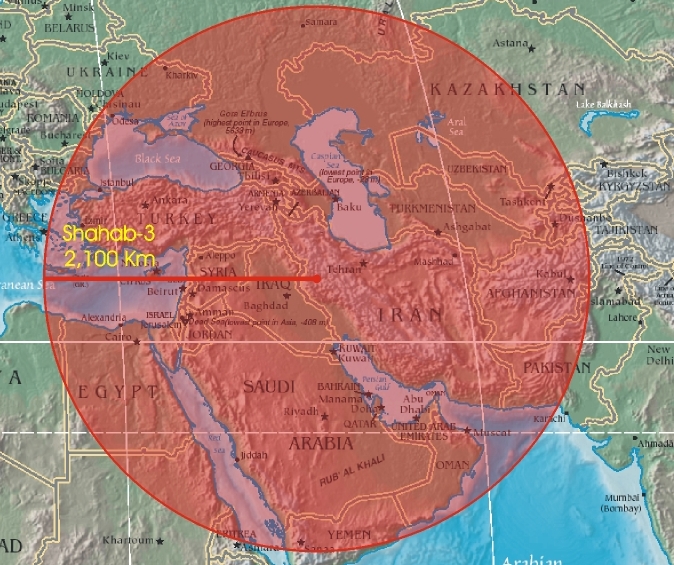
It is likely that the threat of joint US and Turkish intervention in Syria, led to Iran announcing the Great Prophet 6 military exercise. This exercise took place in the Northern borders close to Turkey and showcased the nuclear capable Shahab 3 missile (capable of striking targets in Europe). 

Iraq/Iran


Iran is developing the Mahdi army and Badr Brigade (part of the supreme Islamic Council) into a professional militia/force, that is an alternate to Hezbollah (or as powerful as Hezbollah).


The IRGC told them the plan is to reorganise the militia and arm them. So intructors will be giving them training in weapons handling and Missile launching. So the aim is to develop a force that can intervene in Syria, Lebanon - in support of Hezbollah and augment hezbollah operations in setting up covert cells in Kuwait, Bahrain, KSA. So if Hezbollah can't, the Mahdi army will take over setting up cells in GCC.

Tensions are rising again as Iran wants to make sure that the US does not retain any presence in Afghanistan and in Iraq. In order to achieve this, Iran has partnered with Pakistan and Iraq. Therefore, Iran has delivered more weapons to be used against the US troops in both Afghanistan and Iraq. Sadr has issued more threats and has even permitted suicide attacks against the US troops.

The US has wanted to change its role from a force that is currently policing the streets into a pure counter terror role and support Iraqi forces or Afghan National Army operations against insurgents. We can expect this to occur over the next few months.

"The current discussions cover both, and there are very clear capability gaps that the Iraqi security forces are going to have," Mullen said, citing air defense, aviation and elements of intelligence.


Iran


We understand that western intelligence agencies have concluded that Iran has now produced its first nuclear bomb prototype that is ready to be tested. Iran took advantage of the chaos during the "Arab Spring" to accelerate its program. Recently announcing that Iran will send a monkey into space. Any military analyst will point out that being able to put a payload into space will demonstrate ICBM capability. Rumours are circulating that a blame game has begun within western intelligence agencies.

It is likely that KSA and Turkey will come out with a plan to test nuclear weapons. Prince Turki has been the most vocal in this. Pakistan meanwhile has been expanding its nuclear weapons stockpile significantly and is likely to transfer the weapons technology. We have already reported in a previous article on GCC - Pakistan relations, of Saudi nuclear scientists receiving training in Pakistan. The GCC nuclear program is likely to be based in Khamis Mushayt and we believe that the program has been running for some years.

------------------
Pyongyang has relaunched North Korea’s enriched uranium production, a move that has coincided with Iran’s stocks growing.

In recent months, several European security services including the DGSE and MI6 have been swapping notes about intelligence from U.S. sources that Tehran has been receiving deliveries of UF6, uranium hexafluoride, used in centrifugation enrichment processes. This news comes at a time when Pyongyang is known to have relaunched its production of nuclear fuel.

The existence of a secret supply source from North Korea, if it turns out to be true, would strengthen the case for tougher sanctions against Iran. A report into secret technological exchange between the two countries, written by the United Nations’ panel of experts that monitors compliance with UN sanctions imposed on Pyongyang, was submitted to the Security Council in May. The report, which has not yet been published on China’s request, covers bilateral cooperation on ballistic missiles. On June 10th, the U.N renewed the panel of experts’ mandate.

----------------------

KSA


KSA and the US have partnered together on anti-AQAP operations. Leon Panetta and Gen. Petraeus have both told lawmakers that GCC will put "maximum" pressure on the AQAP. Prince Turki Al-Faisal and Prince Bandar bin Sultan were said to have lobbied the senior KSA leaders to allow a construction of an airbase for CIA/JSOC to operate drones from KSA. It appears that this base may not be operational yet and it is likely that some missions that began in May are operating from a neighbouring country as well as KSA.

The reason behind KSA okay'ing the plan was to prevent AQAP being given a free hand to operate in Yemen as this could affect the survival of the Kingdom. 

---------------------------------

Thank you for reading! Feel free to email us your comments at "eye.on.middleeast" at gmail dot com