Showing posts with label GCC Oman. Show all posts

Monday, April 4, 2011

The GCC – Pakistan Relationship


The GCC – Pakistan Relationship

Pakistan and GCC countries enjoy close bilateral relations. Although all GCC nations have fairly close relations with Pakistan, the Kingdom of Saudi Arabia (KSA) stands out as having the closest relations with Pakistan. Successive Saudi leaders have visited Pakistan from time to time. King Saud visited Pakistan in 1954, King Faisal in 1966 and 1974. King Khalid in 1976. Similarly, King Fahd as Crown Prince visited Pakistan in 1980 and King Abdullah went to Pakistan as Crown Prince in 1984, 1997, 1998 and 2003.

What are the Fundamentals of this relationship?
What keeps the bonds strong is the significant economic aid that Pakistan enjoys, dynasties in the Arabian Gulf enjoy protection from the Pakistani military and lastly religious affinity.

Economic Aid

The First and foremost problem with Pakistan is that, it is a country that survives on economic aid to sustain the functioning of the country. If it were not for this aid, Pakistan would be close to economic collapse as was seen in the balance of payments crisis in 2008[1]. The 2 major contributors to this are the United States and the Kingdom of Saudi Arabia. Other GCC countries also contribute to the coffers of the Pakistani government, but none to the tune of KSA. The United States since 9/11 have contributed close to $17 billion in aid to Pakistan according to statistics[2] recently published. In late 2009, the US congress agreed to a package of $7.5 billion in civil aid over 5 years as well as an additional $2billion in military aid agreed in October 2010[3]. There are no public figures to aid offered by KSA however; many have mentioned that contributions are significant – for example when oil prices reached their peak of $147, the Pakistani government had received a $300million grant from KSA in order to provide a budgetary cushion (in order to fill the fiscal gap) to the high oil prices.

In May 1998 when Pakistan was deciding whether to respond to India’s test of five nuclear weapons, the Saudis promised 50,000 barrels per day of free oil to help the Pakistanis cope with the economic sanctions that might be triggered by a counter test. The Saudi oil commitment was a key to then Prime Minster Nawaz Sharif’s decision to proceed with testing. It cushioned the subsequent U.S. and EU sanctions on Pakistan considerably[4]. The post-1998 economic support by KSA was maintained for 3 years with deferred payments which were written off at the end of the term. In early 2008, they again agreed to deferred payments.

As one can see, Pakistan's corrupt and security-phobic mindset squanders away its finances without investing in developmental activities and is hence highly reliant on economic aid from the US and the KSA in particular. Pakistan greatly relies on the support provided by the KSA in order to survive. Pakistan spends more money on military expenditure (estimated to be $5billion, of course Pakistan receives aid in addition to this which mostly is military[5]) than education (estimated to be just 2.2% of GDP – i.e. $3 billion).


Military Relations

One of the major components to the Pakistani – GCC relations is military cooperation. Due to the economic situation of Pakistan, Pakistan has relied on other nations footing the bill for defence requirements. Most of the Pakistani defence requirements are provided under the guise of military aid to combat terror. However, it is acknowledged that much of the military aid is actually being diverted to being used to fund weapons purchases in order to be used against India - Former president Pervez Musharraf admitted that US military aid given to Pakistan during his tenure was used to strengthen defences against India[6].

What about cooperation between Pakistan and the GCC?

Pakistan has provided military aid and expertise to the kingdom for decades. It began with help to the Royal Saudi Air Force to build and pilot its first jet fighters in the 1960s. Pakistani Air Force pilots flew RSAF Lightning’s that repulsed a South Yemeni incursion into the kingdom’s southern border in 1969. In the 1970s and 1980s up to 15,000 Pakistani troops were stationed in the kingdom[7].

As recently as late 2009/early 2010, during the Saudi conflict with the Houthi rebels, Pakistani forces had been deployed. This author understands that Pakistani Air Force pilots were operating missions in support of Saudi forces fighting the Houthi rebels. Some unverified sources have suggested that the Pakistani Air Force were paid per mission undertaken in the conflict.

During the visit of Assistant Defence Minister of KSA Prince Khaled bin Sultan to Pakistan in 2004, a tighter military cooperation was made between the 2 countries[8]. For the first time a discreet visit to Kahuta was also made. Kahuta is home to Khan Research Laboratories which houses Pakistani nuclear arms facilities.

Here are some highlights of the defence relations between the 2 countries:
-         Increase in training of the number of Saudi nuclear physicists at KRL, Kahuta[9]
-         Support Pakistani defence industry by purchasing Al Khalid tanks and offering sub-contractor work for the $7billion Saudi MIKSA border protection program to Pakistani government contractors.
-         Stationing of a 1000 pakistani soldiers in KSA, with the option to increase to 80,000 in the event of a major conflict.
-         A joint military Command in Saudi Arabia with pre-positioned arms dumps.
-         Possible integration with the Peninsula Shield in Hafr Al Bateen along with allied states such as Egypt.
-         Saudi pilots will travel to Rawalpindi for training along with Pakistani Air Force pilots.
-         There are persistant rumours that Pakistan acted as a conduit for nuclear capable missiles to Saudi Arabia.

Any close watchers of the region can see that Pakistan co-ordinates military purchases closely with the GCC. It is also a well known fact that Pakistani defence purchases are partly paid for by the KSA. Purchase of French Agosta submarines as well as US F-16D’s were some of the examples. This is done so that the GCC can call upon the services of the Pakistani armed forces when needed.

The author understands that Riyadh relies on Pakistani personnel to fill in gaps in personnel in the Saudi military – mainly the Air Force which flies similar aircraft to the Pakistani Air Force. The agreement is that in exchange for bankrolling Pakistani purchases of defence equipment, in return Pakistan provides some of its more experienced pilots/naval officers to be seconded to the Saudi military.

The Downsides to relations with Pakistan

It is apparent today that most major terror plots involve Pakistan in some way or form – usually training and other support. Muscat was made the target of attacks in 2007. Lashkar sympathisers in Oman had plans of targeting prominent landmarks in Muscat, among them a British Broadcasting Corporation office, the Golden Tulip Hotel, and a spa in the upmarket Nizwa area. No final operational plans were made, but Oman authorities found enough evidence to sentence suspects to life in prison.

For further info on the planned attacks in Oman and how Omani and Indian investigators worked together on the Mumbai Attacks please read:
http://www.hindu.com/2009/05/28/stories/2009052860421000.htm
http://www.hindu.com/2009/05/28/stories/2009052850390100.htm

Members of the AQAP (Al Qaeda in the Arabian Peninsula) are also known to be very active in the Af-Pak region and evidence suggests that these individuals receive support from the Pakistani ISI (Inter Services Intelligence). It is also noteworthy to remember that the head of the Al Qaeda’s military wing Brigade 313 is Ilyas Kashmiri – A former member of the Pakistani Army’s Special Services Group (SSG). A well known fact is that the Pakistani army is known to use the services of ex-servicemen for supporting jihadi/terror activities targeting India and ISAF troops (of which Bahrain and the UAE militaries also have a presence) in Afghanistan[10].

It is also not a coincidence that the Saudi ministry of interior recently released names of 47 most wanted terrorists, of which the majority (27) were located in the Af-Pak region. Majority of these leaders are likely to be living under protection of Taliban and their allies such as the Haqqani network. Many of these groups are armed and trained by the Pakistani military. It is also well acknowledged that the Taliban and its leadership are under the control of the ISI[11]. A question GCC security officials need to ask themselves is, is it worth supporting a nation that continues to harbor/support individuals that are trying to topple their governments?

The GCC officials should also be reminded that one of the gravest threats they face today – the Iranian nuclear threat - was caused directly by Pakistan. Evidence has emerged that the “father of the Pakistani bomb” Abdul Qadeer Khan had sold equipment/know how in his nuclear black market to Iran[12]. There are also indications that AQ Khan was aided and abetted by Senior Pakistani military and intelligence officials. In fact AQ Khan himself claimed that Musharraf was aware of the nuclear black market trade and approved deals[13].

It’s no secret that GCC officials are worried about the threat emanating from Iran as we have all read in the wikileaks episode. Again, the question needs to be asked, Is this the partner that GCC wishes to rely upon for its security?

Why is this relevant today?

Many analysts have completely missed the significance of recent high level visits from Kingdom of Saudi Arabia and Bahrain to Pakistan. Prince Bandar (A royal emissary for HM King Abdullah of Saudi Arabia) had visited senior leaders in Pakistan including the Pakistani Army Chief General Ashfaq Kiyani. Sources have confirmed that Prince Bandar is said to have requested Pakistani troops to be deployed if the internal unrest continues in Yemen, Bahrain and the Eastern Province of Saudi Arabia.
The Foreign Minister of Bahrain HRH Shaikh Khalid bin Ahmed bin Mohammed Al Khalifa also paid a visit to Islamabad shortly after Prince Bandar had departed for New Delhi [14]. We expect similar discussions on security coordination to have taken place.

Conclusion

Pakistan army is being utilized as cannon fodder or mercenaries for the Gulf Kingdoms, in return Pakistan gains significant economic support that it requires for its very survival. How long will this relationship continue and also how reliable is this support if Pakistan continues to harbour or indirectly/directly support the AQAP as well as a Nuclear Iran? Is it time for the GCC to start imposing conditions on Pakistan for its continued aid?  

I leave you with a quote from the book (My Life with the Taliban) of Mullah Abdul Salam Zaeef, Taliban regimes Ambassador to Pakistan:

Pakistan, which plays a key role in Asia, is so famous for treachery that it is said they can get milk from a bull. They have two tongues in one mouth, and two faces on one head so they can speak everybody’s language; they use everybody, deceive everybody. They deceive the Arabs under the guise of Islamic nuclear power, they milk America and Europe in the alliance against terrorism, and they have been deceiving Pakistani and other Muslims around the world in the name of the Kashmiri jihad.”


[1] http://www.huffingtonpost.com/2008/11/15/pakistan-agrees-to-76-bil_n_144080.html Pakistan said Saturday it had agreed to borrow $7.6 billion from the International Monetary Fund
[8] Data Source
[9] Data Source
[10] http://www.timesonline.co.uk/tol/news/world/asia/article4926401.ece Taliban leader killed by SAS was a Pakistani Army officer

Friday, March 18, 2011

Libya No Fly Zone - The Plan Plus Update on Bahrain

Libya

Our readers will know that Middle East Analysis has been fairly accurate so far on the Libyan situation. We accurately predicted that Gaddafi would use his Air force decisively to win this war with the rebels unless a No Fly Zone was implemented.

The French military have been busy planning strikes in Libya as part of the No Fly Zone implementation.


Gaddafi's air assets - He has Mig 21's, Mig 23s,a number of Sukhoi 22's and Galib trainer aircraft armed with Air to Surface rockets that have been in use in current operations. All in all, Gaddafi has only 20 air planes that are in working conditions. Out of the 4 Mirages that he had, 2 were flown to Malta as pilots defected.
 
Libyan Air Force Chinooks


In addition to this, Gaddafi has a decent sized helicopter fleet, which are estimated to be around 40. These compromise Chinooks (which incidentally played a signifcant and decisive role in the recent offensive on rebel held cities) that were recently upgraded in Italy as well as a number of Russian attack helicopters. Many of the pilots appear to be from the Syrian Air Force (sent by Bashaar Al Assad as part of a long standing pact that is in place between the 2 countries).

The Plan - Our sources confirm to us that the plan is for Western air forces to destroy Gaddafi's Air Force fleet in the initial strikes. This is due to the importance of the aircraft in striking rebel positions in the last week. This would be key to establishing the no fly zone. The US generals early on had hinted that a No Fly Zone would also mean taking out Libyan Surface to Air Missile sites - this maybe a difficult part of establishing the No Fly Zone but is very much possible.

A French Rafale M combat aircraft performs a catapult assisted launch from the flight deck of the nuclear-powered aircraft carrier USS Enterprise (CVN 65).

We speculate that UK would utilise bases in Cyprus and Sicily. The US appears to be interested in using Egyptian air bases to launch their raids. While the French will probably decide to deploy from the South of France which isn't too far from the Libyan cities.

News reports also sight 2 British Nimrod aircraft that were due to be scrapped this month have been pressed into service.

A crucial test for the coalition force would be to control and coordinate this operation as they have done in the past.

Future issues - Another worry in Washington is that Gaddafi has recruited mercenaries from tribes in Mali that are close to the AQIM area of operations. So the questions being asked is, what will happen once these tribal mercenaries return to their home in Mali with their weapons? Will they swell the AQIM (Al Qaeda in the Maghreb) ranks? As a result, there is a worry that the enitre North Africa may become destabilised. Washington has begun to meet closely with Algerian counter terror advisors, to consult and cooperate on these issues.

Bahrain - Muqtada Al Sadr and some shia groups are debating opening a front against the KSA or Kuwait in solidarity with Bahraini Shia.

These moves are under the assumption that the Saudi led Peninsula Shield Forces are there to put down any unrest. We strongly deny that the Saudi forces are there to deal with the protesters or conduct any sort of riot control.


The KSA led PSF force is there for 2 reasons:
1) Assurance to the Bahraini King, that the KSA will intervene only if the King feels there is a threat to his rule/monarchy.
2) Prevention of any Iranian adventurism.


In fact, the Crown Prince had spoken to the opposition members to explain to them the reasons for the GCC forces deployment. This shows to us that the GCC troops are not there to deal specifically with the internal security issues. The BDF along with the other Ministry of Interior Forces as well as the Bahrain National Guard appear more than capable to deal with any serious unrest.

We expect dialogue to continue, one way or another, as a civil war will create more long term problems, which may end up being a bigger threat to the ruling powers and play into the hands of Iran. This has also been the common view amongst the rulers.

There have been reports of arrested members of the opposition circulating the news and the blogosphere. We see this as an attempt to force the opposition back to the table and solve their problems with dialogue. It remains to be seen if the plans will work.

Thanks for Reading! As always please continue emailing us at eye.on.middleeast "at" gmail "dot" com.

Wednesday, February 2, 2011

Egypt plus Oman - UAE Spy Issue - Update


This will be a quick update:

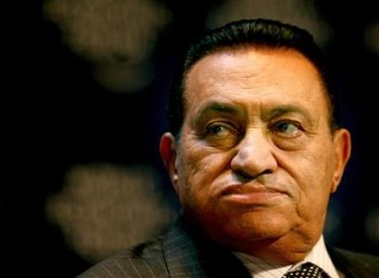
The editor has been watching the Egyptian events unfold. Yesterday, Egyptian President has agreed not to stand for re-election and neither will his son Gamal Mubarak be allowed to do so. Similar statement also came out from Yemen's president.


From what we are told Ambassador Frank Wisner travelled to Cairo and met with Mohammed El Baradei first. After this meeting, he has met senior Egyptian officials to convey messages from the White House. The white house wanted Mubarak to step down immediately and allow the Army to control Egypt during the transition period until elections in 2011. We believe that this is so that the US and Israel are given enough time to decide the best course of action. Israel was infact, against the decision to ask Mubarak to step down, they see Mubarak as a guarantor to the 1979 Camp David accord. US and Israel must be increasingly interested in seeing Omar Suleiman stay on. 

We feel that it was unlikely that Mubarak would have wanted to stay on as President anyway, in light of his health condition. Mubarak wanted to pass on the presidency to his son Gamal in the previous elections. 

Iran's position

The editor does not doubt that Iran will attempt to increase its influence in Egypt. Iran must already be making plans for action such as approaching members of parliament who are considered to be pro-Iranian. Iran will try its best to expand influence and perhaps fund election expenses for pro-Iranian members (or parties) to be elected into Parliament. This would naturally draw GCC into this quest for influence over Egypt. We expect to see a similar situation to Lebanon where the Kingdom of Saudi Arabia spent a huge amount of money (rumours state that these are around a $1billion) on helping Saad Harriri become re-elected. As it stands, Israel appears to be the most worried of the situation, and as much as the GCC, it may be Israel that will step in to help a pro-Israeli party to be elected.

Saudi Arabia was not shy to protect its interests in the current Egyptian unrest. Reports have been received that King Abdullah had set up a team comprising of Security and Military officials to keep an eye on the situation in Egypt. If the situation was to further deteriorate, it would have seen KSA send in troops to take any US made equipment. The editor feels that this is to protect KSA from having these weapons be used against them.

The Future

We at the blog see it as imperative for US and Israel to continue to back Omar Suleiman, who is seen as a man that Israel and the West can do business with. Omar Suleiman handles numerous complicated issues on behalf of the Mubarak regime - especially the Palestine file. Naturally this see's Omar Suleiman making regular trips to Tel Aviv. 

Oman and UAE Spy Issue

Oman uncovers 'spy network but UAE denies any link

http://www.bbc.co.uk/news/world-middle-east-12320859

The authorities in Oman say they have uncovered a network of spies working for the United Arab Emirates, according to the state news agency.
The alleged agents for the UAE are said to have spied on the Omani government and military.
The UAE government denies any knowledge of - or link with - such a network, according to its news agency.
The neighbouring countries are members of the Gulf Co-operation Council and normally enjoy good relations.
Government sources in Oman say the ring was discovered some months ago and that a number of Omani nationals have been arrested.
The spies may have been interested in the issue of the succession of Oman's Sultan Qaboos, according to a security official quoted by the Agence France-Presse news agency.
The sultan is 70 years old and does not have children.
But others suggested the alleged spy ring could be more related to regional politics.
"One possibility is that the UAE wants to know more about Iran-Oman relations because of Tehran and Muscat's long ties in security and military co-operation," Theodore Karasik, from the Institute for Near East and Gulf Military Analysis, told Reuters news agency.
Oman has close relations with Iran, partly because the two countries are joint gatekeepers of the Strait of Hormuz, the route for 40% of the world's oil tanker traffic.
But the sultanate also has strong military and diplomatic ties with the West.
The UAE is a staunch ally of the United States.
UAE authorities received the news with "shock and surprise" according to the Wam news agency.
"The UAE expresses its full willingness to co-operate with... Oman in any investigations that it carries out in full transparency to uncover (those) who try to mar relations between the two countries," said a foreign ministry statement.


Editor can reveal that the spies arrested were working for the UAE State Security services under the control of Hazza Bin Zayed Al Nahyan. The target appears to be senior members of the government, specifically members who appeared to be too close to Iran. The members infiltrated the Cabinet, military and the ISS (Internal Security Service). Rumours circulating appear to place the number of people arrested at 15. 

Abu Dhabi and Omani intelligence officials have met several times since the arrests in order to discuss the issue, but talks appear to have broken down. Hence the release using the official Oman News Agency. 

HM Sultan Qaboos had refused to travel to the GCC Summit held in Abu Dhabi, this was indeed due to learning of the arrests of the spies. 

It is no secret that several members of the cabinet including the Foreign minister are favouring increasing political, economic and military ties with Iran. This may have been the reason why the Emirati's had decided to increase intelligence gathering in Oman.

The retaliation from the UAE have included sending back several senior Omani army officers serving in Emirati ranks (as is common in the GCC military's). Oman suspects that several of these officers will continue to stay in touch with Emirati intelligence.

Thanks for reading.

Monday, December 27, 2010

Dubai Police Chief Lt Gen Khalifan's comments in the press

The Dubai police chief had recently made comments regarding expat workers. You can find the first article from Gulf News describing his statements on Qatar TV.

Dubai Police chief calls on them to stop relying on expat workers

* By Habib Toumi, Bureau Chief

Manama: Dubai's Police Chief supported a claim that if the population of expatriate workers continued to rise in the Gulf Cooperation Council (GCC) states at the current pace, Gulf citizens would soon be marginalised.

"The possibility of GCC nationals turning into a minority in their own countries cannot be ruled out if a law is, for instance, promulgated and enforced to naturalise expatriates," Lieutenant Colonel Dahi Khalfan Tamim said.

He was reacting to questions from the audience at a popular monthly call-in programme on Qatar Television Laqum Al Qarar (It Is Your Decision).

The audience comprised mostly young people from across the Gulf, Qatari daily The Peninsula reported yesterday.

The discussion addressed the issue if the rising numbers of foreign workers posed a serious threat to the GCC identity and culture, and if so, what steps the governments in the region could take to reduce the danger.

If the GCC governments do not take bold steps to check the inflow of foreign workforce, a day could come when locals would be marginalised in their own countries and become like Red Indians in the United States, Lt Gen Dahi said.

Unending chain

Citing examples, he said Malayalees (people from the south Indian state of Kerala) and Iranians who came to the Gulf and ran small neighbourhood stores eventually became millionaires.

"Why can't we run these stores which, after all, we legally own? But we do not want to do such work," he said. An Indian driver is hired by a Gulf family and then he manages to bring a relative even if there is no job for him. The relative hunts for a job and lands one. This is an unending chain," Dahi said. Ministers should bring to the notice of the GCC Rulers the rising threat the heavy influx of foreign workers poses to GCC identity and culture," he said.

However, when asked if the problem could be tackled to some extent if more workers were brought in from Arab countries, Lt Gen Dahi said: "I do agree that they [Arab expatriates] are better than non-Arabs."


Here is an interview in Khaleej Times giving Lt Gen Dahi Khalifan a chance to clarify his comments.

Amira Agarib

27 December 2010, 6:32 AM
Dubai Police Chief Lt General Dhahi Khalfan Tamim recommended a quota system for all nationalities in the UAE to keep the expat population in the country in check.
He made the comment while reaffirming his remarks made to a television channel on Saturday that expats are a threat to the national identity of Emiratis as well as GCC nationals.
Speaking to Khaleej Times, the Commander-in-Chief of the Dubai Police said the Emirati society, which has traditionally been open to other cultures, has the right to preserve its national identity.
The outspoken police chief warned that expatriates may endanger the identity of the UAE nationals in a way that they could influence the culture and the language of the local children, noting that expatriates have brought with them many things that are today misunderstood to be the traditional elements of Emirati culture.
“Today Emiratis are very concerned about their national identity, as the number of foreigners is rising rapidly and nationals are now a minority in their own country. To keep the balance, I recommended a quota system that would ensure that the number of other nationalities should not be more than UAE nationals and Arabs.”
Warning against the mass influx of foreigners to the country, he said only those people who are needed for the jobs should be allowed in the country.
Pointing out the rules of many other countries that discourage import of foreign workforce, he said: “If we go to any of other country to reside, it is considered offensive; they do not allow us easily to reside, work or invest. Each country has its own rules and conditions and we have to do the same to preserve our national identity.
However, he reassured that the country has no hostilities towards foreigners. “But we are concerned about losing our identity, heritage and language. The new generation of Emiratis feel increasingly isolated and expatriates could not observe Emirati culture and adapt to it.”
Dhahi had made the comments on Qatar TV on Saturday, likening the case of GCC nationals to that of Red Indians in the US.

 These are some interesting comments.

Now if you are an expat, one would feel that these comments are a little unfair. Expats are not coming to Dubai (or for that matter any GCC country) to seek welfare benefits (unlike in the UK or in Europe, where healthcare/education is free for all residents). Expats of Dubai pay for everything, schooling, electricity, tax (where applicable) and most importantly health, expats do not seek any benefits from the government. Expats are there to WORK, because there are jobs there that Emirati's are not as qualified to do or do not want to do. In fact, the current rules where Emirati's must be a partner in the business has made the local people lazy and happy about getting cash without having to do much work.

What about the expat who was born in one of these GCC countries? He is a foreigner in the only place he knows well, he goes "back home" to his/her native only to find people calling them foreigners there. They have no identity.

 But if you are an Emirati, you can understand Lt Gen. Khalifan's view. "Where is my culture?" "We want our people to benefit from the growth". It must be hard going to your local  grocery shop to see foreigners working there and having to communicate in a foreign language (English, Malayalam or Farsi).

The attitude of the leadership in most GCC partners, is not to provide nationality to expats in order to preserve their welfare for the local(indigenous) population. Frankly speaking this cements the power for the leaders as their subjects are happy (they have money, education, a world class healthcare system thanks to the visionary leaders). Imagine the effect it would have on the national population if all of a sudden expats were given nationality? Budgets would have to significantly increase, healthcare/education costs would shoot up. This would affect leaders positions politically as the level of service will decrease.

The Sultanate of Oman has offered a slightly different policy to other GCC nations, I believe the rules are if a expat has been resident there for over 25 years and can speak arabic (there are other additional rules here that need to be fulfilled), may naturalise. The country has also provided nationality to many expats who have contributed significantly to the development. This demonstrates fairness and vision of HM Sultan Qaboos.

What is the solution to the Dubai Police Chief's comments?

As in any other western country, seeking naturalisation in the GCC should involve adopting to the local culture. In the UK for example, a naturalisation applicant needs to show english proficiency and must sit a MCQ test on British history/culture. I think adopting something similar maybe a viable option.

Today, the global economy relies on a workforce that can move in and out of the country easily. The Conservative/Liberal Democrat government in the UK have similar problems with the number of immigrants coming to the country. They responded by having a proposal limiting the number of visas. This is NOT A viable option, simply because no MNC in the country will accept this and it is causing a storm. I can place a wager that this promise will not be filled by the current government in the UK simply because this is impossible to do in todays open global economy.


UAE & Oman rely on global trade (Think of the ports in the UAE, Salalah in Oman, HH Sheikh Mohammed's visionary airports in Dubai), it needs Indian IT professionals to come in and do their work, it needs foreign cleaners, it needs more foreign businessmen for trade in their freezones. Its this "openness" that contributes significantly to the growth of the GCC economies. Having a high expat population is a consequence to today's global economy. Closing yourself to the world will be disaster for the economies in the Gulf. Thankfully, the leaders are smart and recognise this.

My guess is that the GCC will provide naturalisation without the benefits that the local "indigenous" population receive such as subsidised healthcare/education etc at some point in the future.

PS. My message to expats is spare a thought for the locals and the leaders of the countries. My message to the "locals" is spare a thought for the expats and don't forget they are contributing to the growth of your great countries.

Thanks for Reading.

Added later:
The GCC should continue to build world class education infrastructure, provide the tools in order for their citizens (locals) to benefit and be able to play a productive part in their economies. Recently, there were complaints on quality (cheating allegations, bribes to professors in order for students to pass exams) of graduates produced at GCC universities. The government and the leadership need to pay attention to this area and ensure that QUALITY of graduates are improved.